



 When people think about climate change, they often picture melting glaciers, rising sea levels, or extreme weather events. But one of the most serious impacts is happening much closer to home, in our gardens, farms, and countryside hedgerows.
Pollinating insects, especially bees, are under growing pressure from a warming planet.
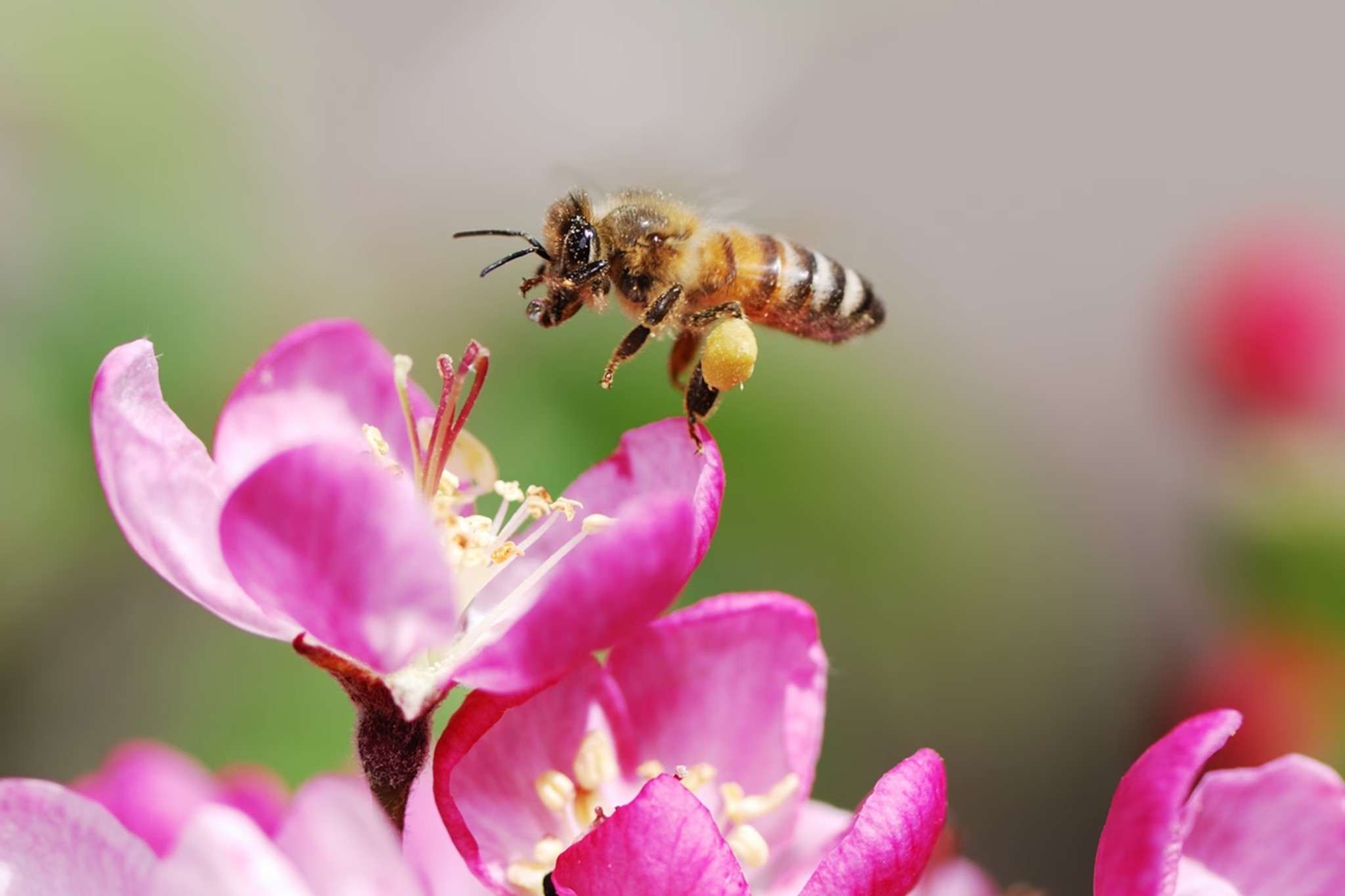
These tiny creatures play an enormous role in sustaining life on Earth. Around three-quarters of the world’s flowering plants and roughly a third of global food crops depend on pollinators. From apples and strawberries to coffee and almonds, many of the foods we enjoy exist thanks to the work of bees, butterflies, hoverflies, moths, and other insects. Climate change is now disrupting the delicate systems these pollinators rely on to survive.
A Changing Climate Means Changing Seasons
One of the biggest challenges for pollinating insects is timing.Bees and flowering plants have evolved together over millions of years. Normally, bees emerge in spring just as flowers bloom, allowing insects to gather nectar and pollen while helping plants reproduce. But warmer winters and unpredictable weather patterns are throwing this relationship out of sync. Some plants are flowering earlier due to rising temperatures, while certain bee species may still emerge at their usual time. In other cases, sudden cold snaps after warm periods can destroy blossoms entirely. When pollinators and plants miss each other’s schedules, both suffer. Scientists call this a “phenological mismatch”. In simple terms, this means bees may wake up to find there is little food available.
Extreme Weather Is Hitting Insect Populations Hard
Heatwaves, droughts, heavy rainfall, and storms are becoming more frequent and intense.For pollinators, these events can be devastating.
Extended drought reduces the number of flowering plants and lowers nectar production, effectively shrinking food supplies. Heavy rainfall can prevent bees from foraging for days at a time, while flooding may destroy nests built underground. Even temperature itself matters enormously. Bumblebees, for example, are adapted to cooler climates and are increasingly struggling in regions becoming too warm. Research suggests some species are already disappearing from the hottest parts of their historical ranges.
Habitat Loss Compounds the Problem
Pollinating insects are already facing pressures from habitat destruction, pesticide use, pollution, and intensive agriculture. Climate stress adds another layer to an already fragile situation. As temperatures rise, many species need to move to cooler areas, often northwards or to higher elevations. But fragmented landscapes filled with roads, urban development, and monoculture farmland make migration difficult. In effect, many pollinators are becoming trapped between unsuitable climates and disappearing habitats.
Why This Matters Beyond Bees
The decline of pollinating insects isn’t just an environmental issue, it’s also an economic and food security issue. Without healthy pollinator populations, crop yields can fall, food prices may rise, and ecosystems become less resilient. Wild plants that depend on pollination also support birds, mammals, and countless other species, meaning the effects ripple through entire food webs. Put simply, protecting pollinators helps protect biodiversity, agriculture, and human wellbeing.
What Can Be Done?
The good news is that solutions are available, and many are surprisingly practical.
Creating pollinator-friendly spaces can make a meaningful difference. Planting native wildflowers, reducing pesticide use, leaving areas of long grass, and supporting diverse habitats all help insects thrive.
Even small actions matter. A window box filled with bee-friendly flowers, a garden left slightly “messy,” or support for local conservation initiatives can collectively create vital refuges for pollinators.
At a larger scale, tackling climate change itself remains essential. Reducing greenhouse gas emissions, protecting natural ecosystems, and promoting sustainable farming practices are critical steps toward safeguarding pollinator populations for the future.
A Shared Future
When people talk about climate change, the conversation often focuses on melting ice caps and endangered species. Those images matter, but climate change is not just about distant ecosystems or animals far away from our everyday lives.
It is also about the bees in our gardens, the insects in our fields, and the fragile systems that put food on our tables. Pollinating insects are often described as the “canaries in the coal mine” for environmental change. Their decline is an early warning that ecosystems are under growing stress.
But their story is also a reminder of how deeply connected we are to the natural world. The future of pollinators is tied to the future of our food systems, biodiversity, and ultimately our own resilience in a changing climate. Protecting bees is not simply about saving one species. It is about protecting the invisible networks that sustain life itself. Because climate change is not just about polar bears anymore, it is about the survival of the small, essential creatures that keep our world blooming.