



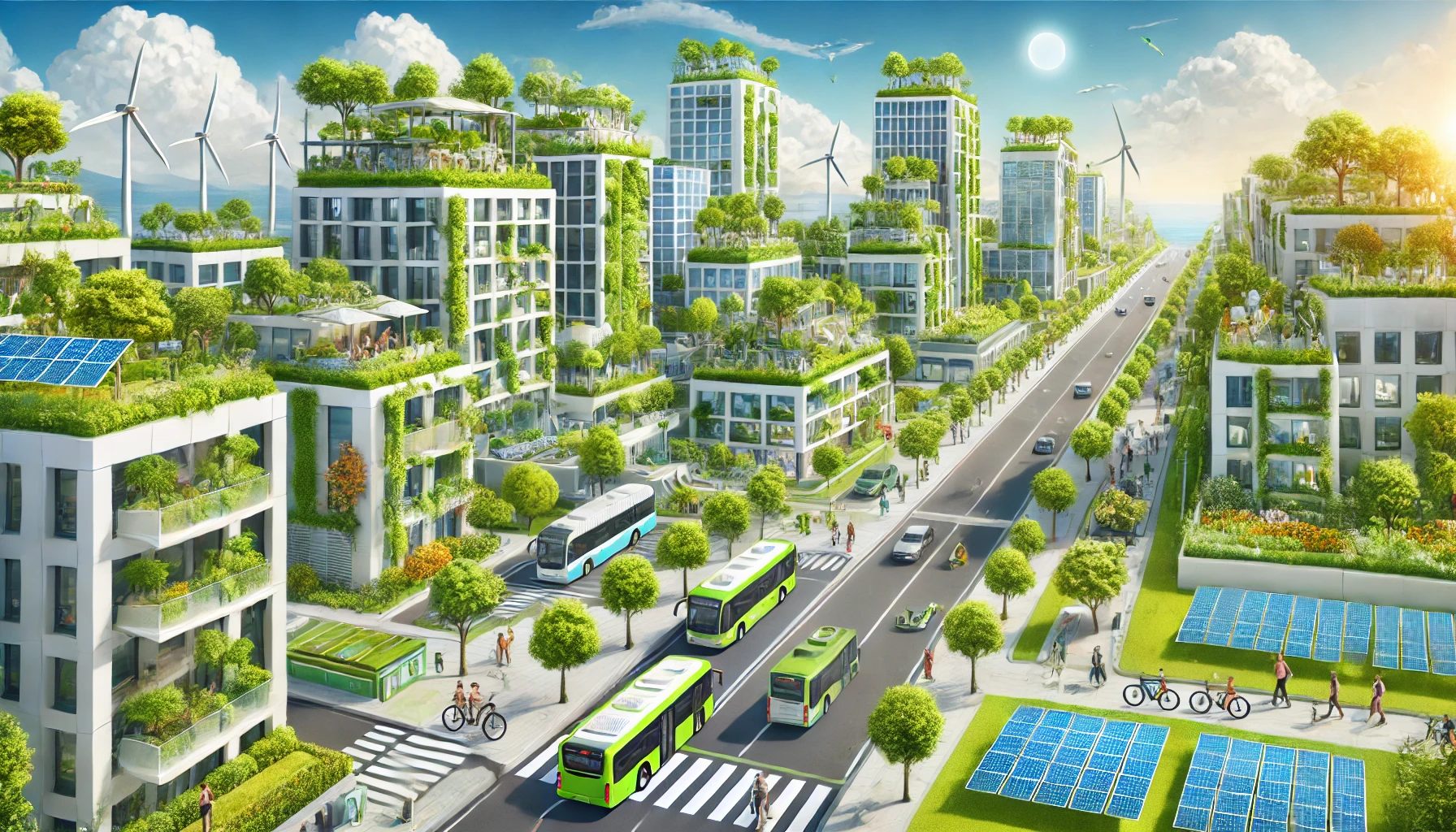
 As temperatures rise and heatwaves become more frequent, staying cool is no longer simply a matter of turning up the air conditioning. For many people, the effects of extreme heat are experienced outside: walking across a town centre with little shade, waiting for a bus on a sun-exposed pavement, or sitting in a park with nowhere to escape the heat. The way we design our towns and cities is becoming increasingly important to how safely and comfortably we live in them.
Why Do Public Spaces Matter?
Cities are often significantly warmer than their surrounding areas because concrete, asphalt and buildings absorb and retain heat. This is known as the ‘urban heat island effect’, and during a heatwave, it can make everyday activities considerably more difficult—particularly for older people, children and those with existing vulnerabilities.
Public spaces can either make this problem worse or help solve it. Trees, parks, shaded streets and accessible water can provide places for people to cool down, exercise and socialise while also supporting biodiversity and improving wellbeing. Designing for heat is therefore not simply about creating greener cities; it is about creating healthier and more resilient communities.
Designing for a Hotter Future
The good news is that we already know many of the solutions.
Trees and vegetation – can provide shade while helping to cool surrounding areas. Green corridors, native and drought-resistant planting, and green roofs can also support biodiversity and create more pleasant spaces for people.
The materials beneath our feet matter too – Traditional dark asphalt absorbs significant amounts of heat, whereas lighter and more permeable surfaces can reduce heat absorption and allow rainwater to infiltrate the ground. Combining these with rain gardens and sustainable drainage systems can help cities manage both extreme heat and increasingly intense rainfall.
Shaded seating, drinking fountains and sheltered public transport stops – can make a major difference to how people experience their neighbourhood during a heatwave.
Paris is already putting some of these ideas into practice. Its OASIS programme has transformed traditionally asphalt-covered schoolyards into greener, cooler spaces using trees, vegetation, permeable surfaces and water management. By 2025, Paris had 165 OASIS schoolyards, with plans to reach 212 by the end of the year.
Barcelona has taken a broader approach through its Superblock programme, redesigning streets to reduce motor traffic and increase green space. Modelling for the programme indicated that these changes could reduce ambient temperatures by around 1.2°C on hot days, while the city has also developed a network of climate shelters.
Why Should Businesses Care?
For businesses and developers, climate-resilient public spaces are increasingly becoming part of long-term planning. Cooler, greener and more attractive areas can support local footfall, improve the experience of employees and visitors, protect property value and contribute to wider sustainability objectives.
Ultimately, climate adaptation does not always require transforming an entire city overnight. It can begin with a tree-lined street, a shaded bench, a permeable pavement or a schoolyard turned into a green space.
Our cities are already getting hotter. The question is whether the places we build today will help us cope with that heat—or make it worse.